In-Depth Guide to Pile Types and How to Choose the Right One for Your Structure By Ballang Intergroup
Last updated: 8 May 2026
441 Views
In building construction, engineers evaluate the load-bearing capacity of piles based on two main factors: skin friction along the surface of the pile and end bearing resistance at the pile tip.
The selection of the right pile type depends mainly on the building’s load requirements, the soil conditions of the site, and any construction limitations at the project location.
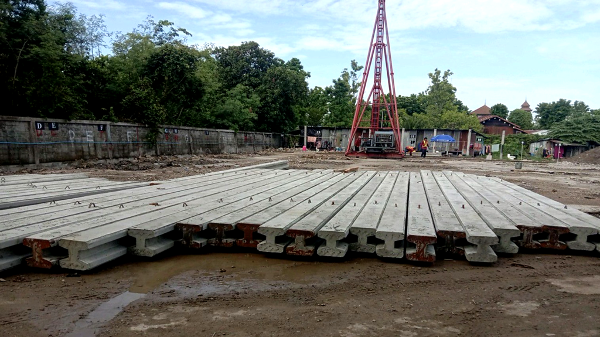
1. Driven Piles (Precast Concrete Piles / Spun Piles)
Driven piles are precast, prestressed concrete piles that are installed into the ground using impact force from a piling rig or pile-driving machine.
• Technical Characteristics:
They come in several shapes, such as I-shaped piles, solid square piles, and spun concrete piles. Spun piles are produced using centrifugal force, resulting in very dense and strong concrete.
• Suitable For:
New house construction on vacant land or open sites where heavy machinery can access the area easily.
• Advantages:
Driven piles are generally the most cost-effective option when compared to their load-bearing capacity. Their quality and structural integrity are also easier to inspect before installation because they are manufactured in advance.
• Limitations:
The installation process creates significant vibration and noise, which may affect nearby houses, buildings, or existing structures.
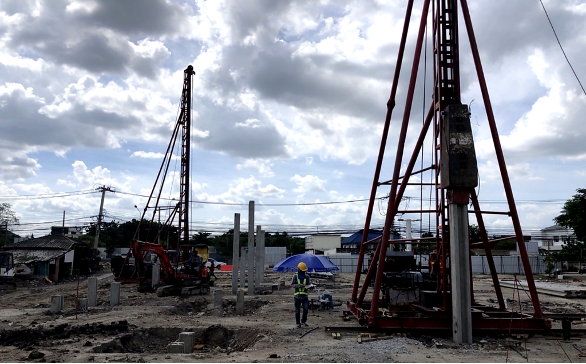
2. Bored Piles
Bored piles are installed by first drilling a hole into the ground, then placing the reinforcement cage inside and pouring concrete into the borehole.
• Technical Characteristics:
Bored piles can be divided into two main methods: the dry process, commonly used for smaller piles, and the wet process, which is suitable for deeper foundations and high-rise buildings.
• Suitable For:
Residential construction in dense communities or sites located close to neighboring buildings, where vibration control is important.
• Advantages:
Bored piles create very low vibration during installation. This helps reduce the risk of soil movement or ground displacement that could cause cracks or damage to nearby structures.
• Limitations:
They are more expensive than driven piles. The concrete pouring process must also be carefully controlled to prevent defects such as necking, where the pile shaft becomes narrower due to soil collapse or improper concreting during construction.
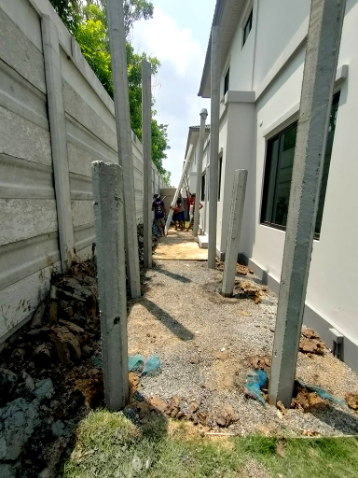
3. Micropiles
Micropiles are small-diameter piles, typically around 20–30 cm, installed using compact machinery. They are designed for projects where space is limited and large piling equipment cannot access the site.
• Technical Characteristics:
Micropiles are installed in short segments, usually around 1.5 meters per section, which are connected together during installation. This allows the work to be carried out in narrow or restricted areas.
• Suitable For:
Renovation projects, house extensions, kitchen extensions, car park additions, and other structural work within existing homes where working space is limited.
• Advantages:
Micropiles create very low vibration during installation. The machinery can usually pass through a standard house entrance, making them ideal for residential renovation work. They can also be driven deep enough to reach a strong bearing soil layer, similar to larger conventional piles.
• Limitations:
The cost per pile is generally higher than standard driven piles due to the specialized production process, segmented installation method, and compact machinery required.
Conclusion: Which Type of Pile Is Right for Your Home?
Choosing the right pile foundation should never be based on price alone. The most important factors are structural safety, soil conditions, site limitations, and the impact on surrounding buildings.
• For a new 1–3 storey detached house on vacant land:
I-shaped driven piles are a cost-effective choice if the site is open and neighboring houses are far enough away. However, if the construction area is close to other homes, dry-process bored piles may be a better option because they create less vibration and are more considerate to nearby properties.
• For kitchen extensions, rear house extensions, or renovation work:
Micropiles are usually the most suitable choice. They can be installed in tight spaces and driven deep enough to reach a strong soil layer, similar to the original house foundation. This helps reduce the risk of differential settlement, where the new extension sinks separately from the main house.
• For high-rise buildings or large-scale structures:
These projects require piles with higher load-bearing capacity, such as wet-process bored piles or large spun piles, depending on the structural engineer’s calculation and the soil test results.
At Ballang Intergroup, we place great importance on foundation work because it directly affects the long-term stability of the entire building. Our engineering team surveys the site, reviews the soil conditions, and recommends the most appropriate pile type before construction begins. This ensures that your home is built on a strong, stable, and reliable foundation — reducing the risk of future settlement and supporting long-term structural safety for years to come.
The selection of the right pile type depends mainly on the building’s load requirements, the soil conditions of the site, and any construction limitations at the project location.
1. Driven Piles (Precast Concrete Piles / Spun Piles)
Driven piles are precast, prestressed concrete piles that are installed into the ground using impact force from a piling rig or pile-driving machine.
• Technical Characteristics:
They come in several shapes, such as I-shaped piles, solid square piles, and spun concrete piles. Spun piles are produced using centrifugal force, resulting in very dense and strong concrete.
• Suitable For:
New house construction on vacant land or open sites where heavy machinery can access the area easily.
• Advantages:
Driven piles are generally the most cost-effective option when compared to their load-bearing capacity. Their quality and structural integrity are also easier to inspect before installation because they are manufactured in advance.
• Limitations:
The installation process creates significant vibration and noise, which may affect nearby houses, buildings, or existing structures.
2. Bored Piles
Bored piles are installed by first drilling a hole into the ground, then placing the reinforcement cage inside and pouring concrete into the borehole.
• Technical Characteristics:
Bored piles can be divided into two main methods: the dry process, commonly used for smaller piles, and the wet process, which is suitable for deeper foundations and high-rise buildings.
• Suitable For:
Residential construction in dense communities or sites located close to neighboring buildings, where vibration control is important.
• Advantages:
Bored piles create very low vibration during installation. This helps reduce the risk of soil movement or ground displacement that could cause cracks or damage to nearby structures.
• Limitations:
They are more expensive than driven piles. The concrete pouring process must also be carefully controlled to prevent defects such as necking, where the pile shaft becomes narrower due to soil collapse or improper concreting during construction.
3. Micropiles
Micropiles are small-diameter piles, typically around 20–30 cm, installed using compact machinery. They are designed for projects where space is limited and large piling equipment cannot access the site.
• Technical Characteristics:
Micropiles are installed in short segments, usually around 1.5 meters per section, which are connected together during installation. This allows the work to be carried out in narrow or restricted areas.
• Suitable For:
Renovation projects, house extensions, kitchen extensions, car park additions, and other structural work within existing homes where working space is limited.
• Advantages:
Micropiles create very low vibration during installation. The machinery can usually pass through a standard house entrance, making them ideal for residential renovation work. They can also be driven deep enough to reach a strong bearing soil layer, similar to larger conventional piles.
• Limitations:
The cost per pile is generally higher than standard driven piles due to the specialized production process, segmented installation method, and compact machinery required.
Conclusion: Which Type of Pile Is Right for Your Home?
Choosing the right pile foundation should never be based on price alone. The most important factors are structural safety, soil conditions, site limitations, and the impact on surrounding buildings.
• For a new 1–3 storey detached house on vacant land:
I-shaped driven piles are a cost-effective choice if the site is open and neighboring houses are far enough away. However, if the construction area is close to other homes, dry-process bored piles may be a better option because they create less vibration and are more considerate to nearby properties.
• For kitchen extensions, rear house extensions, or renovation work:
Micropiles are usually the most suitable choice. They can be installed in tight spaces and driven deep enough to reach a strong soil layer, similar to the original house foundation. This helps reduce the risk of differential settlement, where the new extension sinks separately from the main house.
• For high-rise buildings or large-scale structures:
These projects require piles with higher load-bearing capacity, such as wet-process bored piles or large spun piles, depending on the structural engineer’s calculation and the soil test results.
At Ballang Intergroup, we place great importance on foundation work because it directly affects the long-term stability of the entire building. Our engineering team surveys the site, reviews the soil conditions, and recommends the most appropriate pile type before construction begins. This ensures that your home is built on a strong, stable, and reliable foundation — reducing the risk of future settlement and supporting long-term structural safety for years to come.